
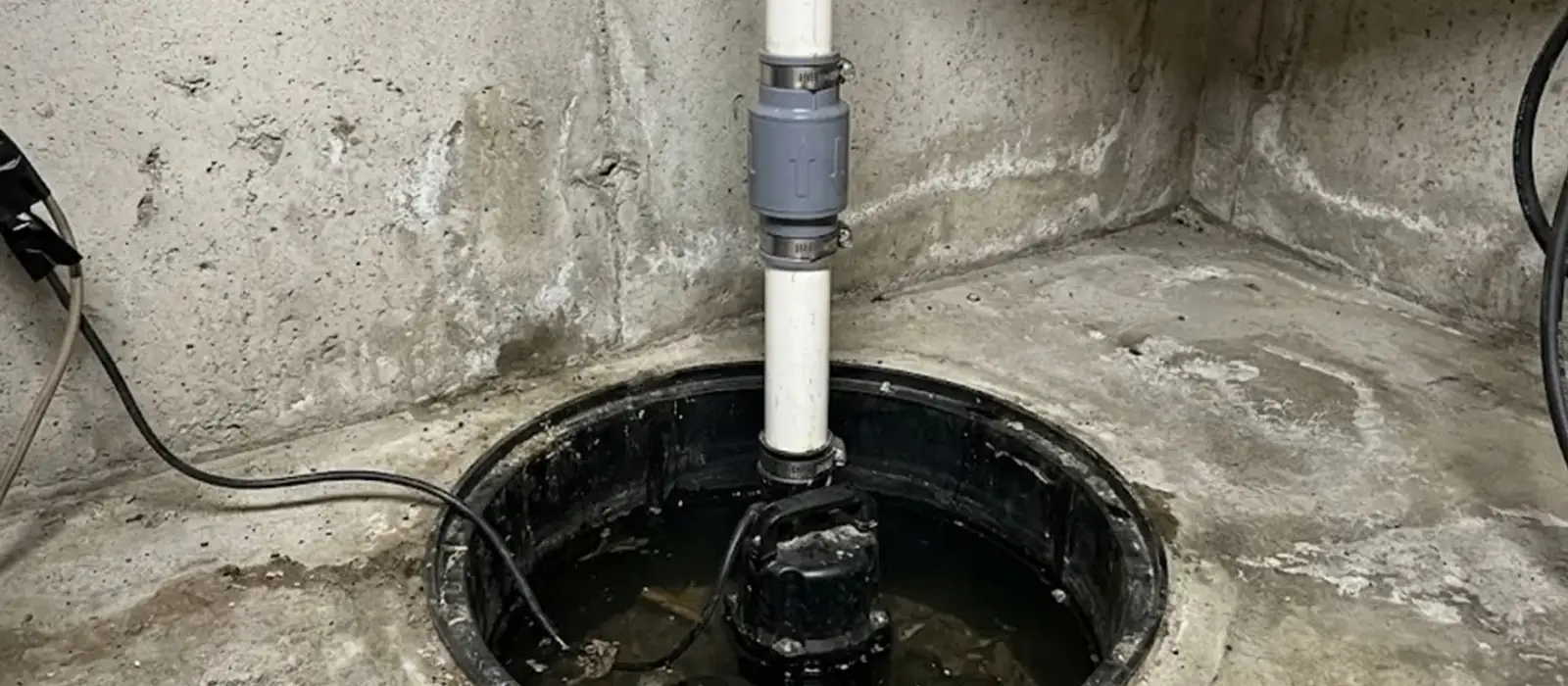
Why a sump pump fails
Most failures come from a stuck float switch, a clogged intake, a failed motor or a lost power supply. A pump that runs nonstop can mean a float jam, a failed check valve or water coming in faster than the pump can move it. One that never runs may be unplugged, tripped or dead.
| Symptom | Likely cause | Typical fix |
|---|---|---|
| Pump does not run, pit is full | Float stuck, power lost or motor dead | Free the float, restore power or replace the pump. |
| Runs nonstop | Float jam, failed check valve or a very high water table | Adjust the float, replace the valve or add capacity. |
| Runs but moves little water | Clogged intake or worn impeller | Clean the pump or replace it. |
| Loud noise or vibration | Worn bearings or debris | Clean or replace the pump. |
| Pit overflows during storms | Pump too small or no backup | Larger pump or a second pump. |
Backup power and backup pumps
Storms that bring heavy rain often bring power loss. A battery backup or a water powered backup keeps the pit emptying when the main pump cannot run. A second pump placed higher in the pit gives more capacity. We explain the choices and what each needs, such as a dedicated outlet or a plumbing connection.
Test your sump pump before storm season
- Pour a bucket of water into the pit and watch the float lift and the pump start.
- Listen for odd noises, grinding or rattling.
- Check that the discharge pipe is clear and drains away from the house.
- Make sure the pump is on its own outlet, ideally a GFCI one.
- Test the battery backup if you have one.
- Clear debris from the pit.
Where the discharge goes
A sump pump moves water outside, away from the foundation. If the discharge pipe is blocked, frozen or aimed at the foundation, the water returns and the pump runs forever. In winter, an exposed pipe can freeze and cause a backup. We check the route and fix what we can.
Diagnose
We check power, float, pump and discharge to find the weak link.
Fix or replace
We repair the part or install a new pump with a check valve.
Add protection
We discuss backup options and a clean discharge route.
Test
We fill the pit and run the pump through full cycles before leaving.
Howell note: ask before you discharge
Howell Township covers about 61 square miles, and groundwater and drainage conditions vary from street to street. A basement that stays dry in one house can flood in the next, so a pump that suits your neighbor may not suit you.
Where a sump pump discharges is a local question. Some areas restrict connections to sanitary sewer or to a neighbor's property. The township Construction Office, at the municipal building on Preventorium Road, can tell you the rules for your street. Never connect a sump pump to a sewer cleanout, and tell us if your home is on septic, since extra water can overload the system.
Basement taking on water?
Call the Howell line and we will send a plumber.
What affects sump pump pricing
A float fix and a new system are very different jobs.
Standard homeowners policies often exclude groundwater and sump pump failure unless you carry a water backup endorsement. Ask your agent before the next storm.
Call (732) 466-1098 for a clear price.
If water is entering through walls and floors even when the pump works, read about basement waterproofing. If a plumbing line is leaking inside the home, our leak detection page helps.
Drying out afterward
The EPA's guidance on mold is to fix plumbing leaks and other water problems as soon as possible and dry all items completely. After a pump failure, that means pulling wet items out of the basement, running fans and a dehumidifier and watching for damp odors.
Questions homeowners ask
Yes. A failed sump pump during a storm is an emergency and we answer around the clock. Call the Howell line, tell us how much water is in the pit and we send a plumber as soon as one is available.
Pour water into the pit. The float should rise, the pump should start and the water should drop quickly. If it does not, call us.
Many last close to a decade, and heavy use can shorten that. A pump that runs all the time wears faster.
If your basement floods during storms or you lose power often, a backup is a good idea. We can explain the options.
Yes. It involves a pit, a pump, a check valve and a discharge line, and we explain the plan first.
Away from the foundation and not into a sewer line or septic system. Local rules may apply.