
Start with the symptom
Most people never search for leak detection until something odd happens. The symptom tells us where to look first, and a short test at home can narrow the search before we arrive.
Meter keeps moving
Shut off every tap and appliance, then watch the meter dial or leak indicator. Movement means water is leaving the pipes somewhere.
High water bill
A bill that climbs for weeks with no change in habits often means a running toilet, an irrigation leak or a slow pipe leak.
Wet ceiling or wall
Water follows framing, so the stain is rarely under the leak. We trace it back along the pipes above.
Warm spot on the floor
A hot water line leaking under a slab or in a floor can warm the surface above it.
Do this before you call
- Turn off all water and note the meter reading, then check again after 30 minutes.
- Test toilets by dropping food coloring in the tank and waiting 15 minutes without flushing.
- Close the main shutoff and see if the meter still moves, which points to a leak outside the house.
- Look at the water heater, washing machine hoses and under sinks for drips.
How we find a hidden leak
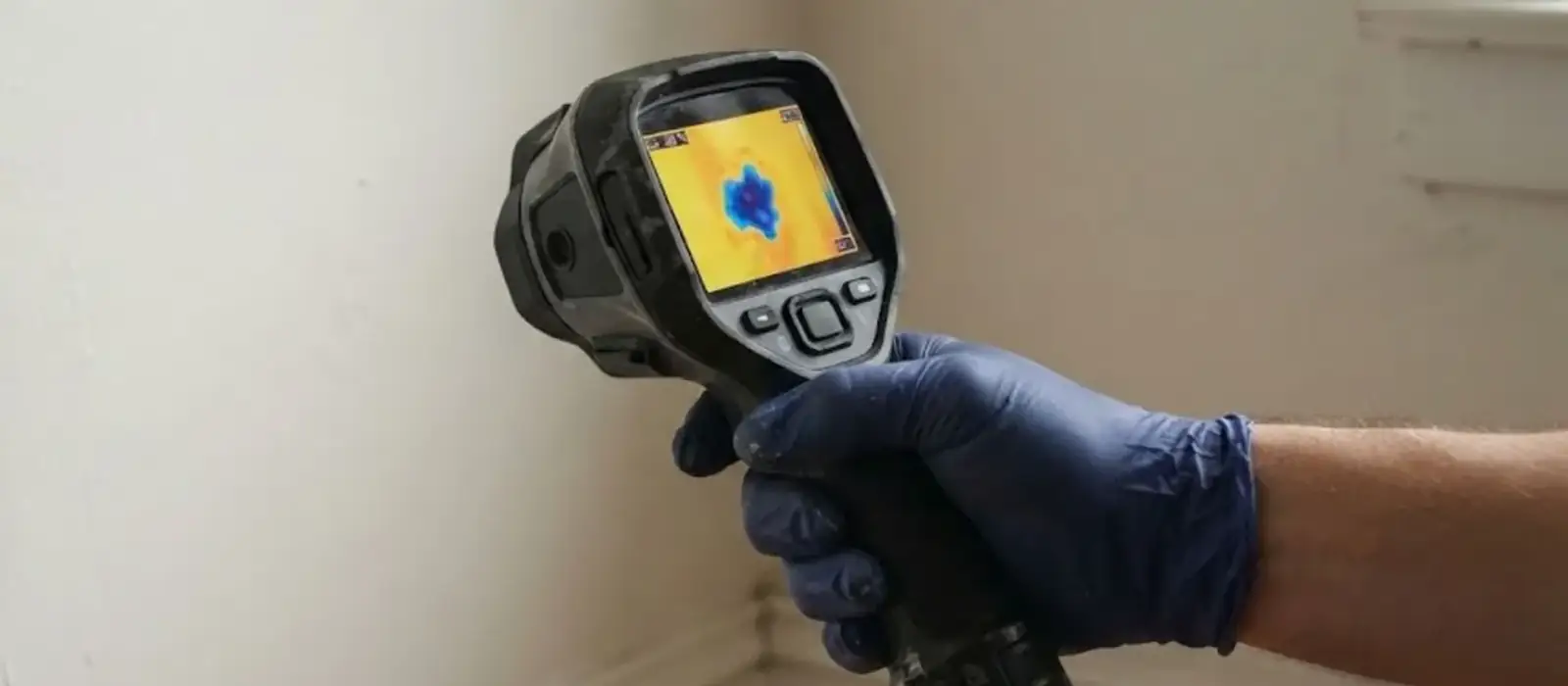
We use several methods and cross check them. Pressure testing isolates a section of pipe and shows if it holds. Acoustic listening picks up the hiss of escaping water through floors and soil. Thermal imaging shows temperature differences that mark a hot water leak or damp insulation. A moisture meter confirms wet drywall or subfloor. A camera inspects drain lines from the inside.
| Tool | Best for | Limit |
|---|---|---|
| Pressure test | Confirming a supply line leaks and which zone | Does not pinpoint the exact spot. |
| Acoustic listening | Slab, floor and buried line leaks | Needs quiet and good contact. |
| Thermal camera | Hot water leaks and wet walls | Cold water leaks show less contrast. |
| Moisture meter | Confirming the area of wet drywall | Does not show the source. |
| Drain camera | Leaking waste lines | Only inside the drain system. |
Slab, crawlspace and buried line leaks
Slab leaks are more of a concern in some warmer states, and many New Jersey homes sit over basements or crawlspaces, but homes with slab-on-grade floors exist. In a basement, a leak shows as damp block, efflorescence or a musty smell. In a crawlspace, we check insulation and floor joists for moisture.
An underground service line leak may surface as a wet patch in the yard or a pressure drop through the whole house, and we cover that repair on the water service line repair page.
Irrigation lines are another source. A broken lawn sprinkler head or a cracked line can run for days and inflate a bill. We test the system separately so the leak is not blamed on the house plumbing.
Ceiling and wall leaks
A ceiling leak under a bathroom is usually a shower pan, a supply line or a drain, and one under a roof is usually weather. We separate the two by testing fixtures and checking the attic. If the water source is a failed fitting behind a finished wall, we cut the smallest access hole we can, repair the pipe and tell you what a drywall patch will involve.
Howell note: your utility meter helps the search
In municipal water areas of Howell, the water meter is your best first tool. New Jersey American Water serves part of Howell through its Coastal North system, and its Yellowbrook Water Treatment Plant sits in the township. If the meter moves with everything off, the leak is somewhere between the meter and the fixtures.
Homes on private wells have no utility meter, so a leak shows as a pump that cycles too often or a loss of pressure. In either case, tell us whether your house is on public water or a well, because it changes how we test the system.
Meter running with everything off?
Call the Howell line and we will send a technician with leak detection tools.
What affects the price of leak detection
You pay for finding the leak and for the repair separately, and we explain both before work.
Some homeowners policies pay for the cost of reaching a leak behind a wall or under a slab, and some pay for resulting damage. Ask your agent before repair, and keep our report and photos.
Call (732) 466-1098 and describe the symptom for a clear price.
Once the leak is located, small repairs are done on the spot, and failing runs are handled under burst pipe repair or a partial repiping. If a leak has damaged a drain line, our drain team can help.
Why a small leak is worth chasing
According to the EPA's WaterSense program, the average household's leaks can waste more than 9,300 gallons of water every year. The EPA suggests checking your water meter before and after a two hour period when no water is being used, which is a stricter version of the test described above.
Questions homeowners ask
Yes. Active leaks and sudden meter spikes are handled around the clock. Call the Howell line, close the main shutoff if water is spraying, and we dispatch the next available technician.
Watch the meter with every tap off. If the dial moves, water is leaving the system. A rising bill, a damp smell and warm floor spots are other clues.
Often we can narrow it to a small area with thermal and acoustic tools, so any opening is small. We never open more than needed.
Test the meter, check toilets with dye, and look for irrigation or outdoor spigot leaks. If those are clear, call us for a pressure test.
Yes. Commercial leak detection uses the same tools on larger systems, and we plan the visit around business hours. Details are on our commercial plumbing page.
Detection and repair are priced separately. After we find the leak, we give you a clear price for the fix before any work starts.