Why a snake sometimes fails and a jetter works
A cable cuts a hole the width of the blade. The grease, scale or roots along the wall stay put, and the opening slowly closes again. We often see a line that was snaked and clogged within weeks. A jetter sprays water forward and backward through the pipe, scraping the wall and flushing the debris out the cleanout.
| Job | Cable | Jetter |
|---|---|---|
| Single hair or paper clog in a sink | Best choice | Not needed. |
| Grease buildup in a kitchen main | Opens a channel only | Scrubs the full wall. |
| Fine tree roots at a joint | Cuts through, grows back | Cuts and flushes, regrowth is slower. |
| Scale in older cast iron | Limited | Effective, but depends on pipe condition. |
Roots, grease and scale: what jetting clears
Roots enter through tiny joint gaps, then thicken inside the pipe. Grease coats the wall and catches debris. Scale hardens in iron and old steel lines. A jetter handles all three when the pipe is sound. Where the pipe is cracked or collapsed, jetting can make a weak line worse, which is why we look first.
We camera the line before we jet
A quick inspection shows if the pipe can take pressure. If it is cracked, offset or has a belly, we show you the footage and talk through a repair instead of forcing water through a damaged pipe.
That inspection ties into our sewer camera inspection service, and repair choices are explained on the sewer line repair page.
Sewer backup: what to do first
While you wait for the plumber
- Stop running water, including the washing machine and dishwasher.
- Do not flush toilets, since the line may be full.
- Move rugs and stored items away from the lowest drain.
- Keep children and pets out of any wet area, because sewage water can carry bacteria.
- Do not mix cleaning chemicals trying to clear it.
How a jetting visit runs
Locate access
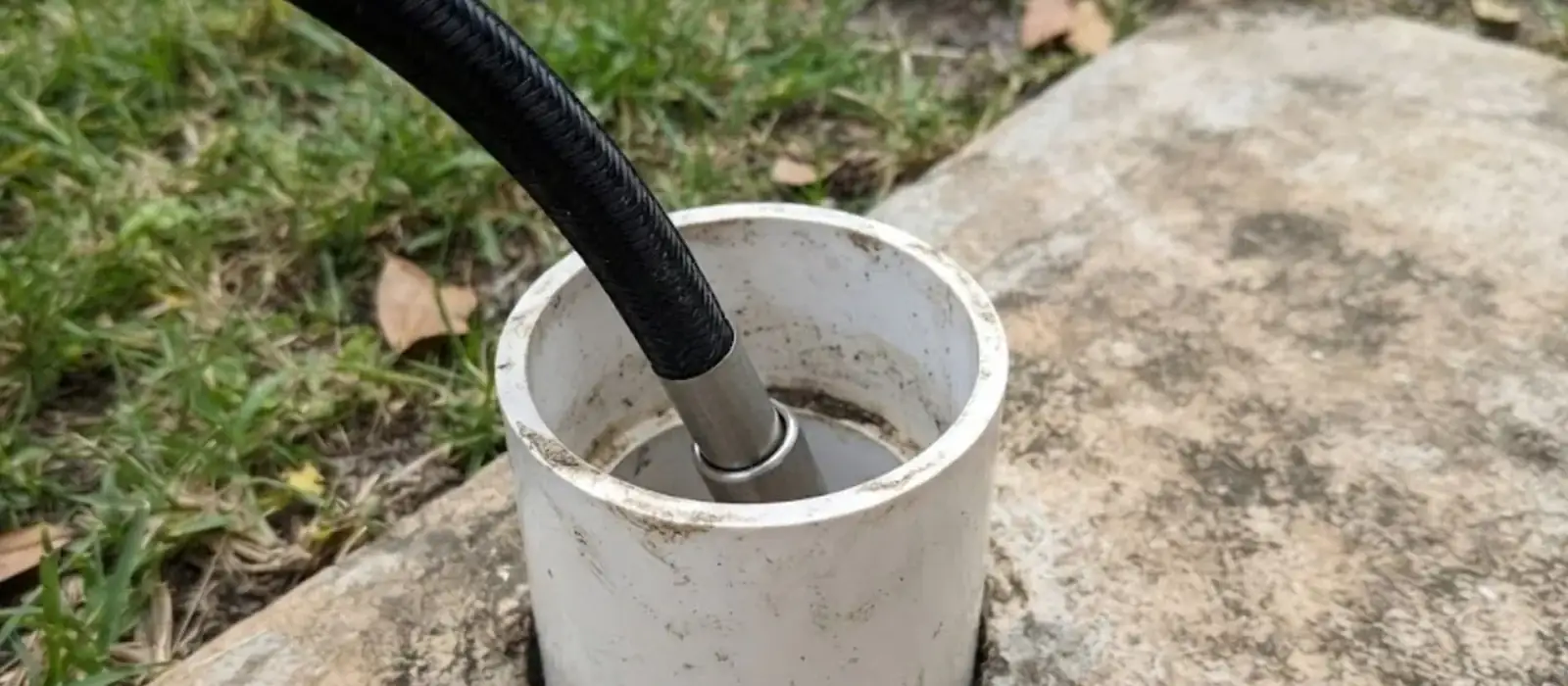
We find a cleanout or open a vent to reach the main line.
Look first
A camera shows the cause and the condition of the pipe.
Jet
We pass the nozzle through in stages, forward and back, until the camera shows clean pipe.
Verify
We run water, flush toilets and confirm free flow.
Howell note: sewer or septic changes the plan
Jetting a sewer lateral only makes sense when your house connects to a public or regional sewer. In Howell, some neighborhoods have long relied on private septic systems. A 2015 report on the Freewood Acres section, off Route 9 near Interstate 195, described wells and septic systems and a sewer connection that reached only part of the 620 lots at the time.
On a septic property we look at the tank, the distribution box and the drain field before we jet anything. If the tank is full or the field is saturated, jetting the house line will not fix repeated backups, and we say so. If you are unsure which system serves you, check your records or ask the township.
Line clogging again and again?
Call the Howell line for a camera look and a clear price.
What affects the price of hydro jetting
Jetting is priced by the job, not by the hour on the meter.
Insurance seldom pays to clear a clog, but some policies cover water damage from a sudden sewer backup. Ask your agent about a backup endorsement and keep photos.
Call (732) 466-1098 for a price based on your line.
For smaller blockages in a single sink, our drain cleaning page explains the cable approach. If the main line is the problem, the sewer line cleaning page covers how we clear it end to end.
How inspections describe pipe damage
Sewer camera work in the industry commonly codes defects using the NASSCO Pipeline Assessment Certification Program system. We describe what we see in plain words, and we give you the footage so a second company can code it if you ask. Repairs fall under the state plumbing subcode. New Jersey adopts the 2021 National Standard Plumbing Code as its plumbing subcode in N.J.A.C. 5:23-3.15.
Questions homeowners ask
Yes. Sewer backups are handled around the clock. Call the Howell line, stop using water in the house, and we send a plumber with a jetter and camera as soon as one is available.
It depends on the pipe. Sound cast iron, clay or PVC usually handle it. Cracked, collapsed or heavily corroded pipe may not, which is why we run a camera first.
Only when the line shows a need. A line with roots or heavy grease may need it every year or two. A clean line may never need it.
It clears roots inside the pipe, but roots return if the joint stays open. A repair or liner stops them from coming back.
Yes, with smaller nozzles. Restaurants and apartment buildings often benefit from regular jetting.
A cleanout makes it easier. If your home has none, we can reach the line through a vent or a toilet, and we can recommend installing a cleanout.