
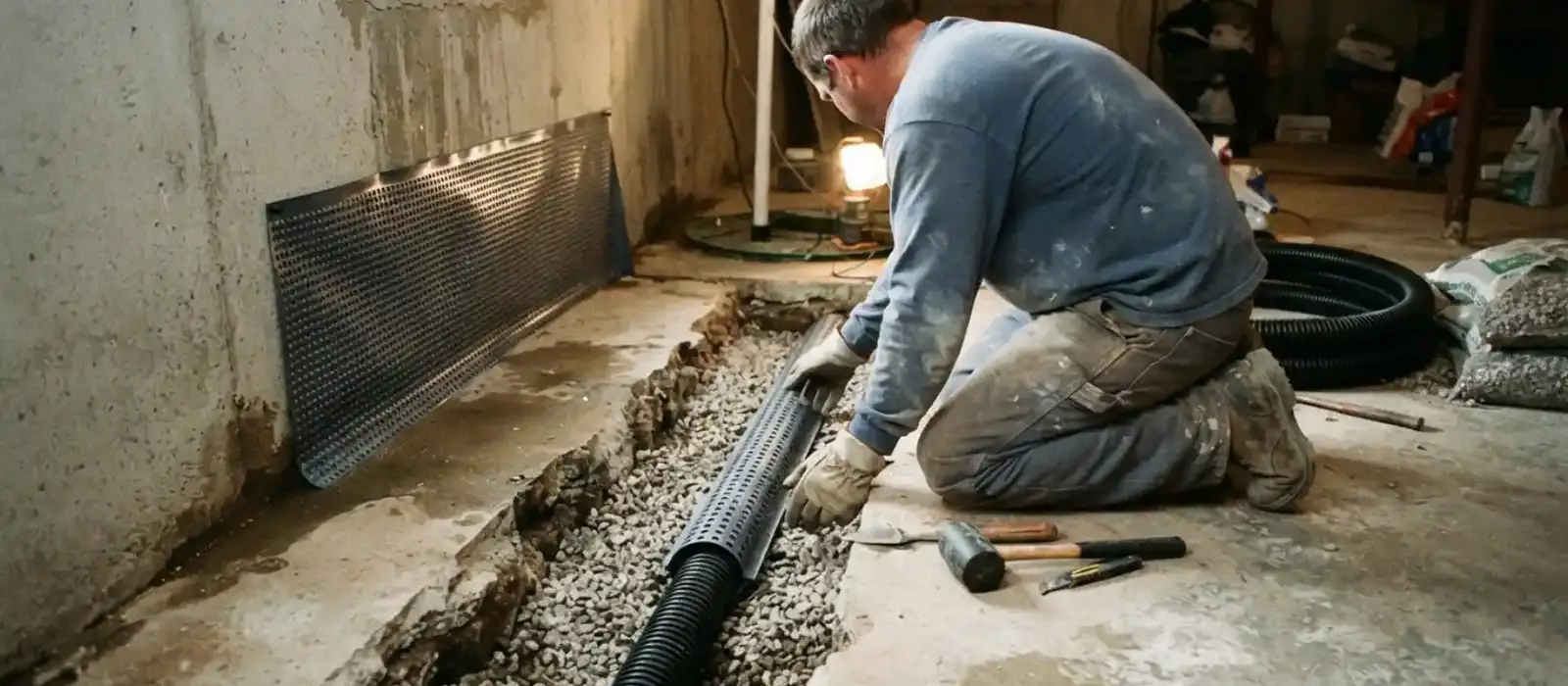
Find the water source first
Basement water has several sources, and each needs a different fix. A plumbing leak adds water from inside the house. Groundwater pushes through the floor and wall joints. Surface water runs toward the house when the grade or gutters are wrong. Condensation looks like a leak but comes from humid air on cold walls.
| Source | What you see | First step |
|---|---|---|
| Plumbing leak | Water near pipes, a heater or a washer | Isolate and repair the pipe or fixture. |
| Groundwater | Water rising at the floor and wall joint | Interior drain and sump pump. |
| Surface runoff | Water at walls after rain, damp near windows | Fix grading, gutters and downspouts. |
| Window well | Water at a basement window | Clear and drain the well, add a cover. |
| Condensation | Wet walls in summer, no pooling | Dehumidify and ventilate. |
Questions that help us diagnose
- Does the water appear only after heavy rain or all the time.
- Where along the wall or floor does it appear.
- Is there a sump pump, and does it run.
- Do the gutters and downspouts empty away from the house.
- Has anything changed recently, such as a new patio or a neighbor's project.
Interior drains and sump pits
An interior drain collects water at the footing and carries it to a sump pit, where a pump sends it outside. It manages water that reaches the foundation instead of keeping it out entirely. The system has to match the amount of water, and the pump has to be reliable, which is why our sump pump service page matters here.
Outside fixes cost less than inside fixes
Many wet basements improve after downspouts are extended, gutters are cleaned and soil near the foundation is graded away from the house. These are low cost steps, and we recommend them first when the symptoms point to surface water. We do not sell a large interior system when a downspout fix will do.
Inspect
We look at the basement, the pipes, the pump and the outside grading.
Explain
We tell you the likely source and the options, from simple to complete.
Fix
We handle plumbing and drainage work, and we refer you to a mason or excavator if the job needs one.
Verify
We test the system with water and give you care tips for the next storm.
Howell note: ask what your street has seen
Howell Township covers about 61 square miles and basement conditions vary. A neighbor's dry basement does not guarantee yours is dry. Ask neighbors who have lived on your street for a while whether water has been an issue, and ask your home inspector if the report noted any moisture marks.
If you have a private septic system, tell us before any drainage work. Water directed toward a septic field can saturate it, and some changes need the township's review. The Construction Office, at the municipal building on Preventorium Road, can tell you what permits apply.
Basement keeps getting wet?
Call the Howell line to schedule a look and a clear price.
What affects waterproofing pricing
The cause decides the fix, and the fix decides the price.
Standard homeowners policies often exclude groundwater and seepage. A water backup endorsement may cover some failures. A plumbing leak that causes damage may be covered. Check with your agent first.
Call (732) 466-1098 for a clear price.
If a pipe is the problem, see leak detection. If a line backs up through the floor drain, see sewer line cleaning.
Moisture and mold guidance
The EPA advises fixing water problems as soon as possible and drying wet items completely to avoid mold. A basement that stays damp after the source is fixed may need a dehumidifier or more drainage, and we explain which when we look at it.
Questions homeowners ask
It reduces or controls water, but results depend on the cause and the system. We explain what to expect before we start.
No. A sump pump is part of many systems, but waterproofing also includes drainage and sealing.
Rarely. Sealant on the inside of a wall does not stop water pushing from outside. The source needs to be addressed.
We handle plumbing and drainage work and refer foundation or masonry work to other trades when it is needed.
Condensation forms on cold surfaces during humid weather and does not pool. A leak shows up after rain or with a steady trickle.