What the symptom usually means
| Symptom | Likely cause | Typical fix |
|---|---|---|
| Runs on and off | Worn flapper or a fill valve that does not shut off | Replace the flapper or fill valve. |
| Water at the base | Failed wax ring or loose closet bolts | Reset the toilet with a new seal. |
| Weak flush | Clogged rim holes, low tank water or partial clog | Clean, adjust or clear the trap. |
| Tank sweating or dripping | Condensation or a loose tank bolt gasket | Tighten or replace the gasket. |
| Wobbling bowl | Loose bolts or a damaged flange | Tighten or repair the flange. |
| Repeated clogs | Low flow design, a drain problem or too much paper | Camera the line or consider replacement. |
The running toilet that raises your bill
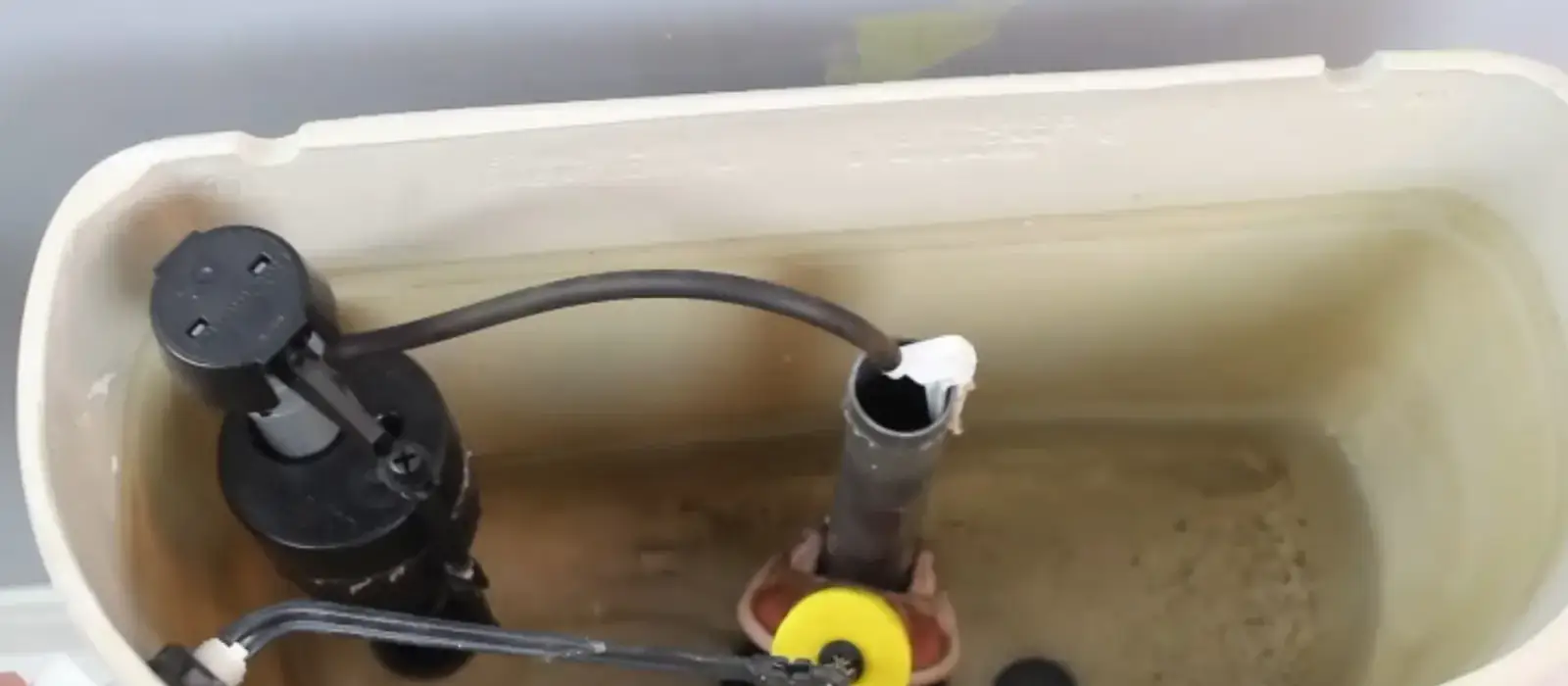
A toilet that keeps running can waste a large amount of water without any sound you notice. The flapper warps over time and stops sealing. The fill valve may leak or stay open. To check, add a few drops of food coloring to the tank, wait fifteen minutes without flushing and see if color appears in the bowl. If it does, the flapper is leaking.
Try these before you call
- Close the small valve behind the toilet if water is overflowing.
- Lift the tank lid and look at the flapper chain for a tangle.
- Check that the float is not stuck against the tank wall.
- Use a flange plunger for a clog and keep a bucket handy.
- Do not use chemical cleaners if the toilet may need a plumber.
A leak at the base is not always the wax ring
Water pooling at the base can come from the wax ring, the tank to bowl bolts, the supply line or even condensation. We dry the area, test each source and fix the right one. A leak that has been running for a while may have soaked the subfloor, so we look for soft flooring and tell you what we find.
When replacement is the better option
An old toilet that clogs often, cracks, rocks on the floor or needs a part that no longer exists is not worth fixing again and again. A new toilet costs more up front and lowers water use. We discuss the choice with you before replacing anything, and we do not push a new toilet when a ten dollar part will do. Our plumbing installation page covers fixture replacement.
Stop the water
We close the supply and protect the floor.
Find the cause
We test each part so we are not replacing parts by guess.
Repair or reset
We replace the failed part, or lift the toilet and reset it with a new seal.
Test
We flush several times and check the base and supply for dryness.
Howell note: water quality and toilet parts
New Jersey American Water's 2025 Coastal North report, which lists Howell as a distribution sampling location, shows total hardness of 72 to 140 mg/L. Moderate hardness leaves mineral deposits that clog the small rim holes under the toilet bowl rim and stiffen fill valve parts over time.
If your flush has weakened, a descale of the rim holes is often cheaper than a new toilet. If you are on a private well, iron or sediment can stain the bowl and foul the fill valve sooner, so tell us which system you use.
Toilet running or leaking?
Call to book a repair visit or ask about replacement.
What affects toilet repair pricing
Most toilet repairs are small, and we explain any bigger job first.
Insurance does not cover a worn flapper, but sudden water damage from a supply line failure may be covered. Take photos and call your agent.
Call (732) 466-1098 for a clear price.
If the toilet clogs again and again and the problem is bigger than one fixture, read about our drain cleaning work. If you see water on the floor and cannot find the source, our leak detection team can help.
Why a silent leak matters
According to the EPA's WaterSense program, a worn flapper can silently leak thousands of gallons a year. That is why a toilet that runs on its own deserves a quick fix, and why the food coloring test is worth the fifteen minutes.
Questions homeowners ask
The flapper or fill valve is usually worn and not sealing. Replacing the part usually stops it.
Water pooling at the base after a flush, a sewage smell, or a toilet that rocks all point to a failed wax ring or loose flange.
It becomes one if water is overflowing or if other fixtures are backing up too. Stop the supply valve and call.
If the toilet clogs often, cracks or needs parts that are hard to find, replacement is better. Otherwise a small repair often does the job.
Yes. We clean the rim holes, check the tank water level and clear any partial clog in the trap.