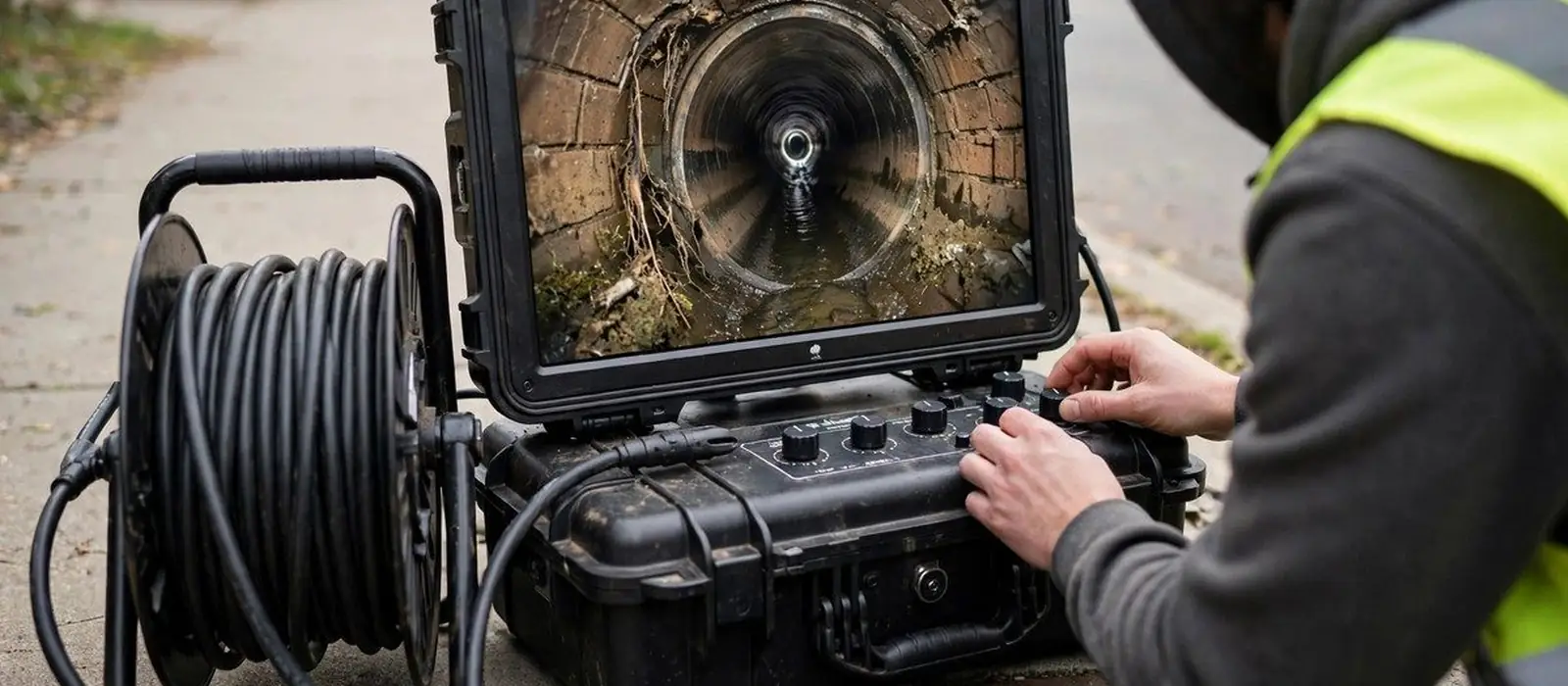
What the camera can show you
Root intrusion
Fine roots at joints or thick masses that block the pipe, and where they enter.
Cracks and offsets
Hairline cracks, separated joints and sections that no longer line up.
Bellies
Low spots where water and waste sit, which explain slow drains and repeat clogs.
Scale and grease
Buildup that narrows the pipe even when it is not fully blocked.
Pipe material
Cast iron, clay, PVC or fiber pipe, which tells you what to expect.
Collapses
A pipe that has caved in and needs replacement.
Inspection before you buy a Howell home
A home inspector looks at the visible plumbing. The sewer line runs underground and is rarely covered. A camera inspection fits between the inspection contingency and the closing date, and it can reveal a repair the seller never mentioned. If the camera shows damage, you can negotiate the price or ask for a credit.
Camera work is also useful if the house is on septic. We check the line to the tank and tell you if the line is intact, while a septic professional should inspect the tank and field.
| Item | Detail |
|---|---|
| Video record | Footage of the full run, with damage marked. |
| Findings | A plain explanation of what was found and where. |
| Location | Distance and depth to each problem, when a locator is used. |
| Options | A clear price for any repair, lining or cleaning that follows. |
When a camera is not enough
If the line is blocked solid, we clear it first with a cable or a jetter so the camera can pass. Our sewer line cleaning page explains that step, and hydro jetting covers heavier buildup. If the footage shows damage, we move to the repair options on our sewer line repair page.
Find access
We locate a cleanout, or pull a toilet or open a vent when none exists.
Run the camera
The camera moves through the line while we watch the monitor and measure footage.
Locate defects
We mark each defect with its distance from the access point.
Report
You get the footage and an honest summary of what needs action and what does not.
We also keep the video if you want a second opinion. A buyer's attorney, a seller or an insurer can look at the same footage and agree on what it shows.
Howell note: ask about the connection
Howell is the largest municipality in Monmouth County at about 61 square miles, and not every street has public sewer. If you buy in a neighborhood that has long used septic systems, ask the township and the seller whether the house is on sewer or septic and whether any sewer project is planned. A 2015 report on the Freewood Acres section described a gradual shift from septic to a regional sewer line.
For any repair that follows, the township's Construction Office and its plumbing subcode official, at the municipal building on Preventorium Road, can tell you which permits apply.
Need a camera look at your sewer line?
Call to schedule an inspection or ask about a pre purchase visit.
What affects the price of a camera inspection
Inspection pricing is simple and predictable.
Insurance does not pay for inspections. If the footage shows a covered sudden failure, bring it to your agent.
Call (732) 466-1098 for a clear price.
How to read a sewer inspection
Municipal and contractor reports often use the NASSCO Pipeline Assessment Certification Program coding standard for cracks, roots, offsets and breaks. We explain each finding in plain words and hand you the video, so you can share it with a buyer, a seller or an insurer.
Questions homeowners ask
Most take about an hour, longer if the line needs cleaning first or the run is long.
We inspect the line between the house and the tank. A septic professional should inspect the tank and field.
Yes. We give you the footage so you can share it with a buyer, a seller or an insurance agent.
After repeated backups, before buying a home, or every few years on old pipe with known root problems.
Yes. Tell us the property type and any history of backups, and we plan the visit around tenants.