
Pick the right unit before the day of the install
A good installation starts with sizing. A tank is rated by gallons and recovery rate. A tankless heater is rated by gallons per minute at a temperature rise. A hybrid is rated by efficiency and needs air around it. We ask who lives in the house, how many bathrooms run at once, and where the heater will sit.
Planned installation
- Time to compare brands and fuels.
- Venting and gas lines planned in advance.
- Permit and inspection scheduled.
- Old unit removed on a set day.
Rushed installation
- Choice limited to what is in stock.
- Venting and gas fixes found mid job.
- Inspection scheduled after the fact.
- Water damage may already exist.
What a proper installation includes
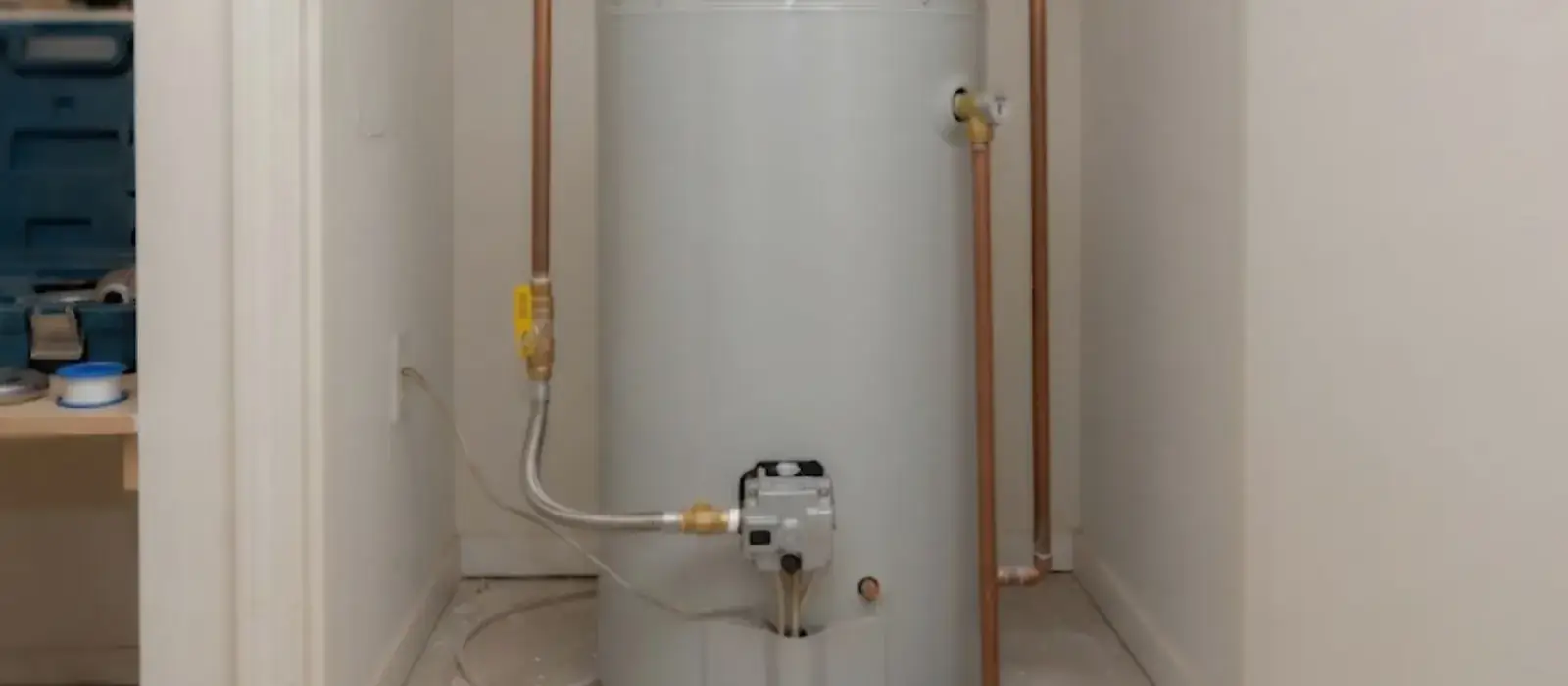
- Shutting off and draining the old heater, or setting a new location if the unit is moving.
- New flexible connectors, shutoff valves and a thermal expansion tank where the system needs one.
- A temperature and pressure relief valve with a discharge pipe run to a safe termination.
- Venting checked for slope, clearance and sealed joints on gas units.
- Gas line, electrical circuit or condensate drain sized for the new unit.
- A drain pan under tanks in finished spaces where a leak would reach a floor.
- A final leak, pressure and temperature test, plus a walk through of the controls.
The expansion tank is the item most often skipped. When a house has a check valve or pressure reducing valve on the incoming line, heated water has nowhere to expand, and pressure spikes can damage fixtures. If your plumbing was changed in the past, ask us to check the pressure.
Gas, electric and hybrid installs differ
Gas installs depend on the flue and the gas line. An older tank may vent into a chimney that is oversized for a modern unit, and the venting has to be relined or swapped for direct vent. Electric installs depend on the circuit, sized for the heater, and a tankless electric unit can need a much larger service. A hybrid needs a condensate drain and clearance for air intake.
| Heater | Needs | Common upgrade |
|---|---|---|
| Gas tank | Gas line, flue, combustion air | New liner or direct vent kit. |
| Electric tank | Dedicated circuit and breaker | Wire gauge or breaker change. |
| Gas tankless | Larger gas line, vent, drain | Condensate neutralizer and isolation valves. |
| Hybrid | Space, air, condensate drain | Condensate pump. |
Howell note: ask the Construction Office first
Howell's Construction Office, which includes a plumbing subcode official, enforces the State Uniform Construction Code at the municipal building on Preventorium Road, and fees are set in the township code. New Jersey's plumbing subcode adopts the 2021 National Standard Plumbing Code.
Because permit requirements can differ for a like for like swap, a new fuel type or moved venting, ask the office before you schedule. Also check the hot water your utility delivers. New Jersey American Water's 2025 Coastal North report shows hardness from 72 to 140 mg/L, so a flush plan and an anode rod check belong in the maintenance schedule for any new tank in a municipal water home.
Planning an upgrade?
Call and we will talk through sizing, fuel and timing.
What affects the cost of an installation
Your quote reflects the unit and the work around it.
A planned installation is a home improvement, not a covered loss, so insurance generally does not pay. Some utilities and the state sometimes offer rebates for efficient models, so check before you buy.
To price your install, call (732) 466-1098 with the make, size and location of the heater.
Keep the new heater running
Flush the tank once a year, test the relief valve, and set the thermostat near 120 degrees to limit scalding and energy use. Tankless owners should descale on the schedule the maker recommends. If something stops working later, our water heater repair service picks up where the installation leaves off.
Installation rules we work to
Installation follows the manufacturer's instructions and the state plumbing subcode. New Jersey adopts the 2021 National Standard Plumbing Code as its plumbing subcode in N.J.A.C. 5:23-3.15. Venting, gas connections and relief piping are the parts inspectors look at first, so we set them up for the inspection and not only for the first day.
Questions homeowners ask
A standard tank swap is usually a half day. Moving the heater, converting fuel or adding venting can take a full day or more.
Yes, if the electrical service can carry the load. We check the panel and circuit first and tell you what has to change.
Often yes. If your house has a check valve or pressure reducing valve on the water line, heated water has nowhere to expand, and an expansion tank is the usual fix. We test the pressure and recommend one when needed.
Yes. We remove and dispose of the old unit as part of the installation.
A modern unit has better insulation and efficiency than an old one, so many homes see a drop. The size of the saving depends on the fuel, the model and how much hot water you use.