The parts under a double sink
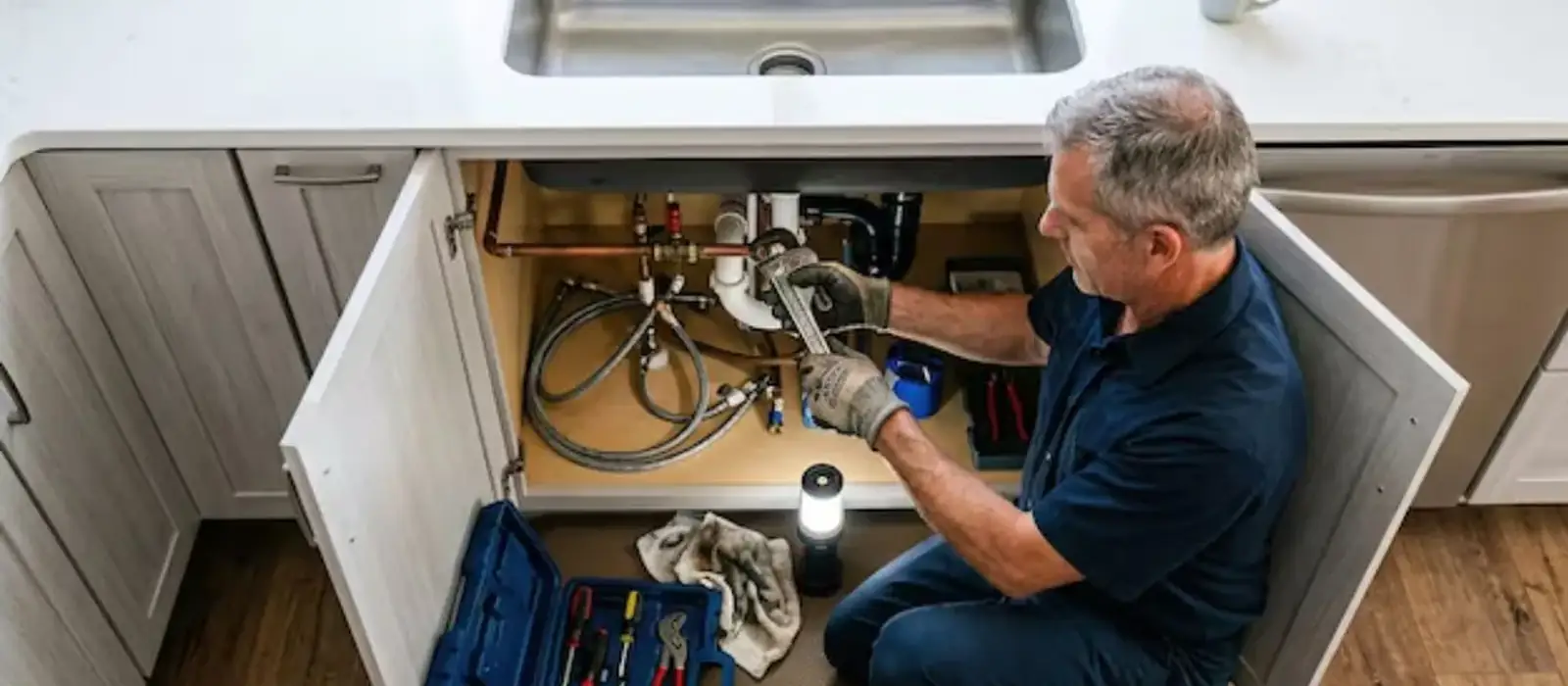
Looking under a double sink, you see a set of pipes that can look complicated. They are not. Water leaves each basin through a basket strainer, drops through a tailpiece, joins a horizontal pipe called a continuous waste, and runs into a P trap before entering the wall.
| Part | What it does |
|---|---|
| Basket strainer | Catches food and seals the sink opening. |
| Tailpiece | Short vertical pipe under each strainer. |
| Continuous waste | Horizontal pipe that joins both tailpieces. |
| Tee or waste outlet | Directs the water down toward the trap. |
| P trap | Holds water that blocks sewer gas from entering the house. |
| Trap arm | Pipe from the trap into the wall drain. |
A simple layout step by step
Set the strainers
Seat each basket strainer on plumber putty and tighten it from below.
Add tailpieces
Attach a tailpiece to each strainer with a slip nut and washer.
Join the basins
Connect the continuous waste between the tailpieces so water flows toward one side.
Connect the trap
Attach the P trap and trap arm, then check that the trap arm slopes slightly toward the wall.
Each slip joint uses a nut and a beveled washer. The bevel goes toward the joint, and the nut goes on first. A reversed washer is a common reason for a drip. Hand tighten and add a little more with pliers. Overtightening cracks plastic nuts.
What changes when you add a garbage disposal
A disposal replaces the strainer on one basin and has its own discharge outlet. The discharge connects to the continuous waste, and the second basin still drains through a standard strainer and tailpiece. Many dishwashers also tie into the disposal inlet, so you need to check that connection and the knockout plug if the dishwasher is new. Our garbage disposal repair page explains the unit in more detail.
Common mistakes under a double sink
A trap arm that slopes the wrong way, a trap that sits too deep, a tilted trap and a reversed slip joint washer cause most of the leaks and slow drains we see. A second trap on the second basin is not needed when both basins join before one trap.
Venting and why slow drains point to it
A drain needs air to flow. The vent pipe in the wall provides it. If the vent is blocked or the trap arm is too long, the sink can gurgle or drain slowly even when the trap is clean. A gurgling sink with a clean trap points to a vent or a drain line problem, which is a plumber's call, and our drain cleaning page covers how we find the cause.
Before you start or call
- Measure the distance from the strainers to the wall drain.
- Note whether a disposal or a dishwasher connects to the sink.
- Check that the shutoff valves under the sink work.
- Look at the wall drain for corrosion or a poor connection.
- Have a bucket and towels ready for water in the trap.
- Check for a hole in the cabinet floor for the supply lines.
Tools and materials for the job
You need slip joint pliers, a bucket, plumber putty, a hacksaw or a tubing cutter for trimming tailpieces, and a flashlight. Buy a kit that matches the sink, either 1.5 inch pipe for kitchens or 1.25 inch for many bathrooms. Dry fit every piece before you tighten anything, so you see how the parts line up and where to cut. Label the pieces if you need to take the trap off again.
Testing the new drain
Fill both basins, pull the plugs and watch the drain. Run water for two minutes and look at every joint, then wipe each with a dry paper towel to catch a slow drip. If the sink gurgles, the trap arm may be too long, the slope may be wrong or the vent may be blocked. Fix what you can find and call a plumber for what you cannot.
Howell note: code, permits and who to ask
New Jersey uses the 2021 National Standard Plumbing Code as its plumbing standard. Swapping a sink drain in the same position usually differs from moving a drain or adding a fixture, and the township decides what needs a permit. In Howell, the Construction Office and its plumbing subcode official work from the municipal building on Preventorium Road.
Check with them before you move any piping inside a wall. If your home is on septic, adding a disposal adds solids to the tank, so ask your septic professional first. Plumbers working in Lakewood and across the area follow the same state code, and for installation help see our plumbing installation page.
Sources
Trap and vent rules in New Jersey come from the state plumbing subcode, which adopts the 2021 National Standard Plumbing Code under N.J.A.C. 5:23-3.15. Check that code and the township before you move any pipe.
Rather have a plumber look at it?
Call the Howell line, any hour, and describe what you see.
Questions about this topic
No. Both basins join before one trap, so one trap is enough for the pair. Two traps cause siphoning and slow drains.
The trap should sit as high as practical under the sink, and the trap arm should slope slightly toward the wall. Local rules and the layout decide the exact height.
Yes, in many layouts, through the disposal inlet or a tailpiece connection. Use a high loop or an air gap if required.
A partly blocked vent, a long trap arm or a clog downstream can cause gurgling. A plumber can find the cause with a camera or cable.
Both work. Plastic is easy to install and resists corrosion. Metal can last long but costs more and can corrode.