The short answer: parts are rarely the biggest cost
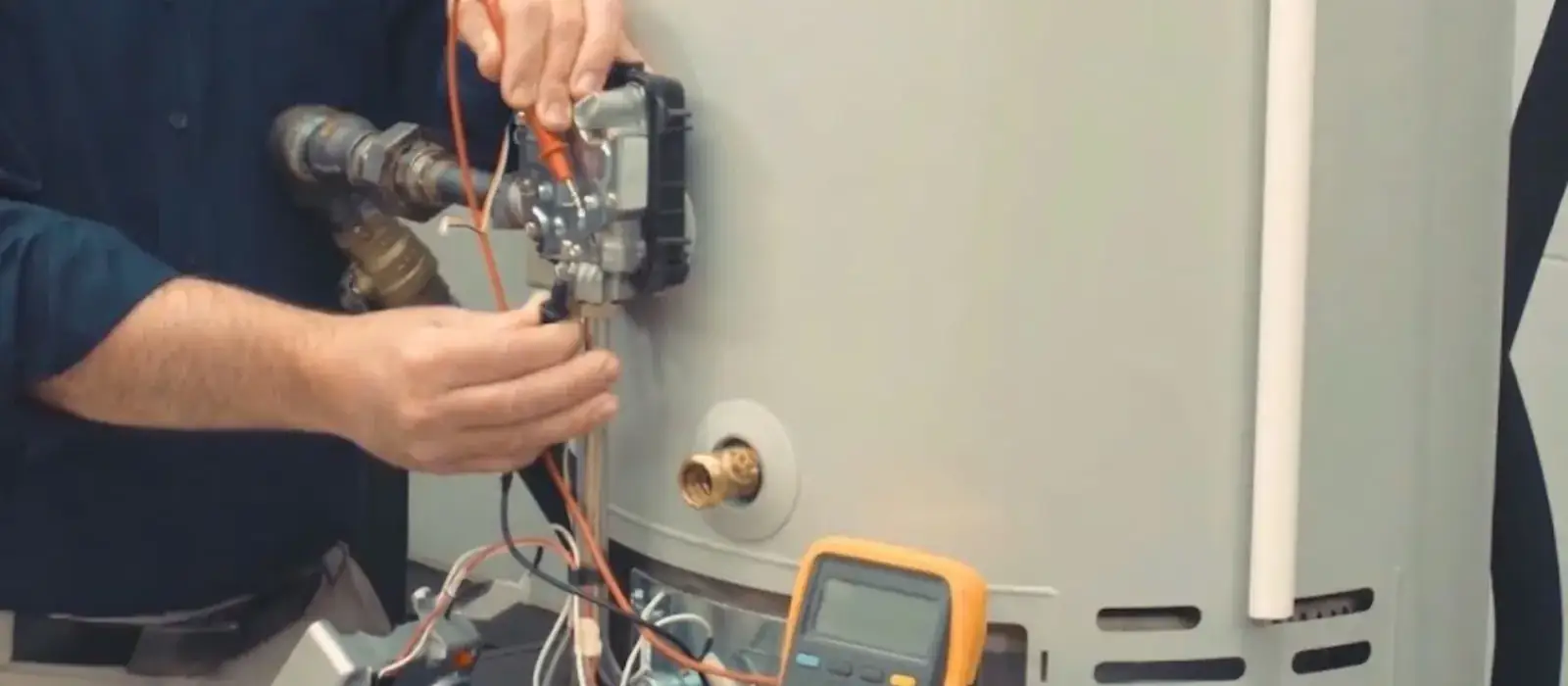
Most heater repairs use a part that costs little by itself. The larger share of the bill is the diagnosis, the labor to drain and reach the part, and in some cases the time of day. A heating element, a thermostat, a pressure relief valve or a gas control each lives in a different spot and takes a different amount of work to reach.
The question to ask is not only what the repair costs. It is also how much life the tank has left, because a repair on a tank that is failing anyway is money spent twice. We cover that decision point below.
Common repairs and what makes each one cost more or less
| Repair | Relative cost | What pushes it higher |
|---|---|---|
| Heating element (electric) | Low to moderate | Two elements, corroded screws, tight access. |
| Thermostat (electric) | Low to moderate | Wiring faults found during the swap. |
| Thermocouple or flame sensor (gas) | Low to moderate | Dirty burner chamber, older gas control. |
| Pressure relief valve | Low | Corroded fittings, discharge pipe needs work. |
| Gas control valve | Moderate | Part availability and brand. |
| Leaking tank | Not repairable | Replacement is the fix. See the replacement page. |
| Drain valve or fitting leak | Low | Seized or corroded valve, hard water scale. |
A leak from the tank body is the one repair that is not a repair. Once the steel shell corrodes through, the tank cannot be patched. If water is coming from the bottom of the tank and not from a fitting, plan on replacement, and read about our water heater replacement work.
Age and the repair or replace line
A tank water heater commonly lasts around ten years, though some last longer and some fail sooner. The data plate on the side shows the serial number, which usually encodes the manufacture date. If your tank is near that range and the repair is anything beyond a cheap part, the numbers favor replacing it.
Repair usually makes sense when
- The tank is under about eight years old.
- The failed part is a thermostat, element, sensor or valve.
- There is no rust or water at the base of the tank.
- You want to buy time before a planned remodel.
Replacement usually makes sense when
- The tank is over about ten years old and needs a major part.
- Water is leaking from the tank body.
- You have had two or more repairs in a year.
- The heater is undersized for how many people use it now.
What affects the bill beyond the part
Cost factors to expect
- Time of day, since nights, weekends and holidays cost more than a scheduled visit.
- Access, because a heater in a tight closet or a crawlspace takes longer.
- Fuel type, since gas and electric need different parts and skills.
- Hard water scale on the elements and drain valve.
- Code updates, such as a missing expansion tank or a relief valve discharge pipe.
- Part availability for older or less common brands.
None of these should surprise you. When we arrive, we find the problem, explain it in plain terms and give you a clear price before we start. If the price makes you want a second opinion, that is a fair request.
Simple checks before you call
- Check the breaker, or on a gas unit check that the pilot or ignition light is working.
- Reset the high limit button on an electric heater if it has tripped, following the label.
- Look at the base of the tank for water and rust.
- Check the temperature setting, which may have been bumped.
- Note any error code or blink pattern on the gas control.
Do these safely and stop if you smell gas. Leave the house and call the gas utility or 911. For a gas smell, do not use light switches or phones inside. Then call us if there is still no hot water. Our water heater repair page explains how we diagnose the unit.
Howell note: water quality and tank life
New Jersey American Water's published 2025 water quality report for its Coastal North system lists Howell as a distribution sampling location. Its reported total hardness range is 72 to 140 mg/L, which is moderate. Over several years, that hardness leaves scale on heating elements and in the bottom of the tank, which is why a tank that has never been flushed can fail earlier than one that has.
If your house is on a private well, hardness, iron and sediment can be very different. Test the water, and tell the technician which water source you use, because it changes both the diagnosis and the advice on how to keep the next heater alive longer.
Lakewood homeowners ask us the same questions, and our Lakewood emergency plumbing page explains how we handle an after hours failure in that township. If you are in Jackson, Freehold or Farmingdale, our service area page lists the towns we reach.
Sources
The CDC advises annual servicing of gas and oil water heaters by a qualified technician, and New Jersey adopted the 2021 National Standard Plumbing Code as its plumbing subcode in N.J.A.C. 5:23-3.15 for relief valve piping.
Rather have a plumber look at it?
Call the Howell line, any hour, and describe what you see.
Questions about this topic
Usually not if the repair is major. A 12 year old tank is past typical life, and a new failure may follow soon after. A cheap part such as a thermostat may still be worth it.
It may be a drain valve, a relief valve or the tank itself. A drip from a fitting can be repaired. Water from the tank body means replacement.
Moderate hardness leaves scale that can shorten the life of elements and the tank bottom. Flushing the tank each year helps, and a well test tells you if your water is harder or contains iron.
It is possible, but it involves power, water and tight access. If you are unsure, call us. Always turn off the breaker before opening any panel.
Call the Howell line, tell us the problem and we give you an arrival window for the next available plumber. We do not promise a fixed arrival time.